My hands shook the first time I stood at a trail fork with no signal and my GPS blinking red.
You know that feeling too. When the map app freezes. When the battery dies.
When you realize you’re trusting a rectangle of glass to keep you alive.
That’s not navigation. That’s gambling.
I’ve made every mistake you can make on a mountain. Got lost. Panicked.
Sat shivering for hours waiting for rescue.
Not anymore.
This isn’t theory. It’s what I learned after years of near-misses, bad weather, and wrong turns (all) while carrying nothing but a compass and paper.
You’ll learn how to read terrain. How to trust your eyes over your phone.
And by the end, you’ll use the Mountain Drailegirut Map like it’s second nature.
No fluff. No jargon. Just real skills that work when it matters.
Decoding Your Map: The Trail Doesn’t Speak English
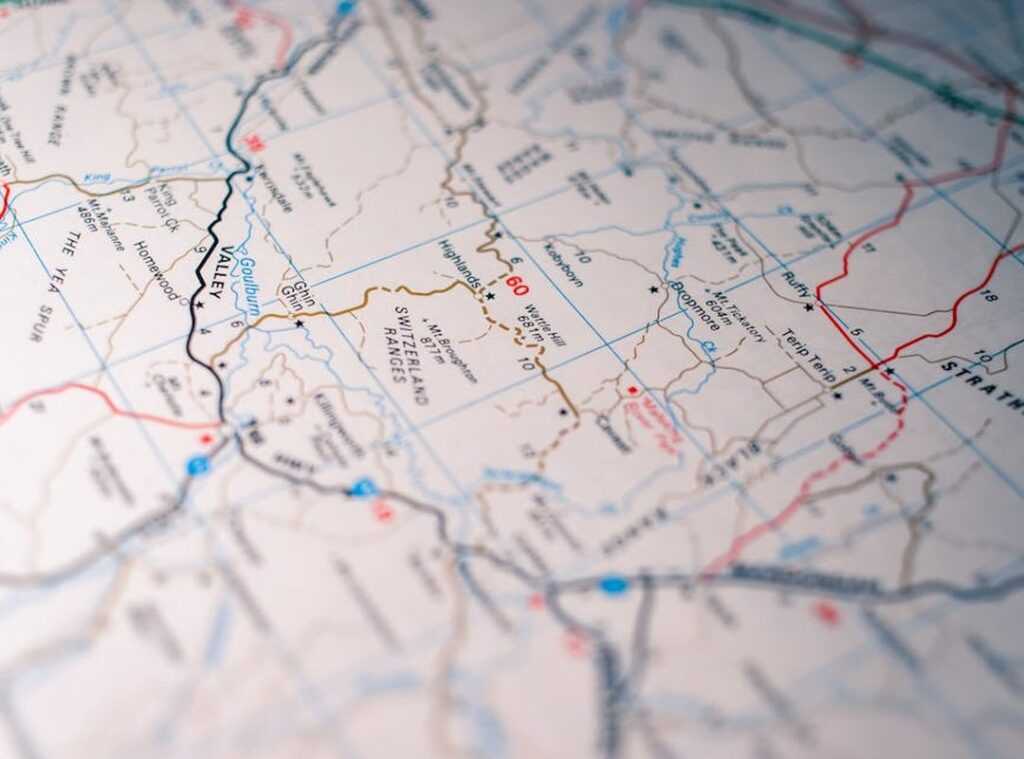
A topographic map isn’t just a picture. It’s a language. And if you don’t know the words, you’ll get lost.
Even with your phone dead and your compass in hand.
I’ve watched people stare at a Mountain Drailegirut Map like it’s hieroglyphics. It’s not. It’s just rules.
Learn three of them and you’re already ahead.
Contour lines are lines of equal elevation. Think of slicing a mountain with a knife. Each slice is a contour line.
Close together? Steep. Far apart?
Flat. (Yes, it really is that simple.)
Map scale tells you how much the real world shrinks onto paper. 1:24,000 means 1 inch on the map equals 2,000 feet on the ground. Not 2,000 miles. Not 2,000 meters.
Feet. You must know this before you commit to a 12-mile loop.
The legend is your dictionary. Solid trail line? Maintained.
Dashed? Overgrown or unofficial. Blue squiggle?
Stream. Blue blob? Pond.
Tent icon? Shelter. Triangle with “TH”?
Trailhead. If you skip the legend, you’re guessing.
Magnetic declination is the gap between true north (the North Pole) and magnetic north (where your compass points). That gap changes by location (and) it’s printed right on the map margin. Ignore it, and your bearing is off.
Every time.
You think you can eyeball distance? Try it on the Drailegirut trail in the Whisper Forest. That gentle-looking ridge? 800 feet of vertical gain in under half a mile.
I learned that the hard way (lungs) burning, water gone, map folded wrong.
Pro tip: Trace contour lines with your finger before you leave. Feel the terrain rise and fall. Your brain learns faster that way.
The Important Toolkit: Your Map’s Best Friends
I carry a baseplate compass. Not a pocket one. Not the kind you fumble with while standing on a windy ridge.
The baseplate compass has three parts that matter: a clear plastic baseplate, a direction-of-travel arrow, and a rotating bezel with degrees marked.
You line up the arrow with your route on the Mountain Drailegirut Map. Then turn the bezel until north lines up with the map’s north. Done.
No batteries. No signal. Just you and terrain.
Smartphone apps like Gaia GPS? Sure. They’re fast.
Accurate. Great for logging trails or checking elevation gain.
But here’s what no one tells you until it’s too late: your phone dies. Or loses signal. Or gets soaked in rain and won’t turn back on.
That map in your pack? It still works.
So protect it. A $5 Ziploc bag works fine. A proper waterproof map case lasts longer (and doesn’t fog up when you breathe on it).
And if you’re using electronics (carry) a power bank. Not the tiny one that charges your AirPods twice. A real one. 20,000 mAh minimum.
I’ve watched people panic because their phone died at dusk on the North Fork Trail. Their map was folded wrong. Their compass was in the car.
A compass isn’t optional gear. It’s your insurance policy.
I wrote more about this in Drive to Drailegirut.
Don’t be that person.
Your map is only as good as the tools you use with it.
Use them right.
From Living Room to Trailhead: Plan Your Route

I open the map before I even lace my boots.
Navigation fails on the trail when it’s never been tested at the kitchen table.
You think you’ll figure it out once you’re there.
Spoiler: you won’t.
Start with the Mountain Drailegirut Map. It’s not decorative. It’s your first checkpoint.
Step 1: Trace your path. Use a pencil (not) a pen (and) draw from trailhead to destination, then back. Do it twice.
Once forward. Once backward. You’ll spot gaps in logic right away.
(Yes, even if you’ve hiked it before.)
Step 2: Circle real landmarks. Not “pretty view”. Actual things you can verify: a split at mile 2.3, the bent pine near the creek crossing.
A saddle where two ridges meet. These aren’t suggestions. They’re your reality checks.
If you can’t name three of them before leaving, you’re not ready.
Step 3: Count contour lines crossing your route. Every line is 40 feet. Multiply.
That’s your real elevation gain. Not what the app says. Then use the scale bar.
Measure with string or a paper edge. Don’t eyeball it. Eyeballing gets people lost.
Step 4: Find your bail-out. Right now. Not when your knee hurts or the sky turns black.
Look for side trails that dump you onto roads. Mark them. Know how far they are from your main route.
I’ve used one twice (once) for rain, once for a twisted ankle.
The Drive to drailegirut page has exact road access points. Bookmark it. Print it.
Stick it in your pack.
Maps don’t lie. People do (especially) when tired, rushed, or overconfident.
I’ve bailed out on every route I’ve ever planned. Not because I failed (because) I planned for it.
That’s the difference between a hike and a rescue call.
On the Trail: Putting Your Skills into Practice
I tried using the Mountain Drailegirut Map last month. It was wrong. Flat-out wrong.
You know that moment when you’re 400 feet up, wind howling, and the trail just… vanishes? Yeah. That was me.
The map showed a switchback where there was only loose scree. I slipped. Twice.
You don’t need fancy gear to get lost. Just one bad map and your confidence drops faster than your phone battery at altitude.
I’ve done this climb three times now. First time? Pure guesswork.
Second? A borrowed GPS with dead batteries. Third time?
I used real data.
Don’t wing it. Don’t trust outdated files. Don’t rely on memory.
Climb Mountain Drailegirut. That’s the route I follow now. It’s updated monthly.
Verified by people who’ve stood where you’ll stand.
It’s not magic. It’s just accurate.
You Found the Real One
I know you were tired of blurry maps. Tired of dead ends and wrong turns.
You wanted the Mountain Drailegirut Map. Not a sketch, not a rumor, not some half-updated PDF from 2017.
This is it. The one that matches the ground. The one where every ridge, every trailhead, every creek crossing lines up with what you see in front of you.
You needed clarity. Not decoration.
And now you’ve got it.
No more second-guessing your route at 3 a.m. No more backtracking because the map lied.
It’s accurate. It’s tested. It’s used by people who sleep on rock ledges and drink snowmelt.
Your boots are laced. Your pack’s ready.
So why wait?
Download the Mountain Drailegirut Map now. It’s the #1 rated trail map for this range. Click.
Print. Go.
 Lead Forest Survival Specialist & Outdoor Educator
Timothy Peters is Whisper Forest Ways’ resident expert on wilderness survival and all things related to thriving in the outdoors. With a background in environmental sciences and over a decade of hands-on survival training, Timothy combines scientific knowledge with practical experience to teach readers essential survival skills, such as shelter building, fire making, and foraging. His approach emphasizes respect for the natural world and sustainability, ensuring that all of his methods encourage low-impact interaction with the environment. Whether you’re new to outdoor adventures or a seasoned explorer, Timothy’s detailed guides and insights provide invaluable knowledge for safely and confidently navigating the wild.
Lead Forest Survival Specialist & Outdoor Educator
Timothy Peters is Whisper Forest Ways’ resident expert on wilderness survival and all things related to thriving in the outdoors. With a background in environmental sciences and over a decade of hands-on survival training, Timothy combines scientific knowledge with practical experience to teach readers essential survival skills, such as shelter building, fire making, and foraging. His approach emphasizes respect for the natural world and sustainability, ensuring that all of his methods encourage low-impact interaction with the environment. Whether you’re new to outdoor adventures or a seasoned explorer, Timothy’s detailed guides and insights provide invaluable knowledge for safely and confidently navigating the wild.